

Writers often elevate sports to sublime levels away from reality bites. For instance, football (the one played predominantly with feet, not hands) has been described as the “beautiful game” as if beauty is exclusive to it. As much as I love that sport, the irony of such a description is risible considering some of how it is played on the field and the frequent hooliganism off it. Cricket has been called, among many things, the “game of glorious uncertainties”. And why ever not? Every other sport is so utterly predictable that one shouldn’t even bother watching them 😏 Alright, I will attempt to avoid resorting to the gushing hyperbole of the fan-writer or my own abundant sarcasm in what follows.
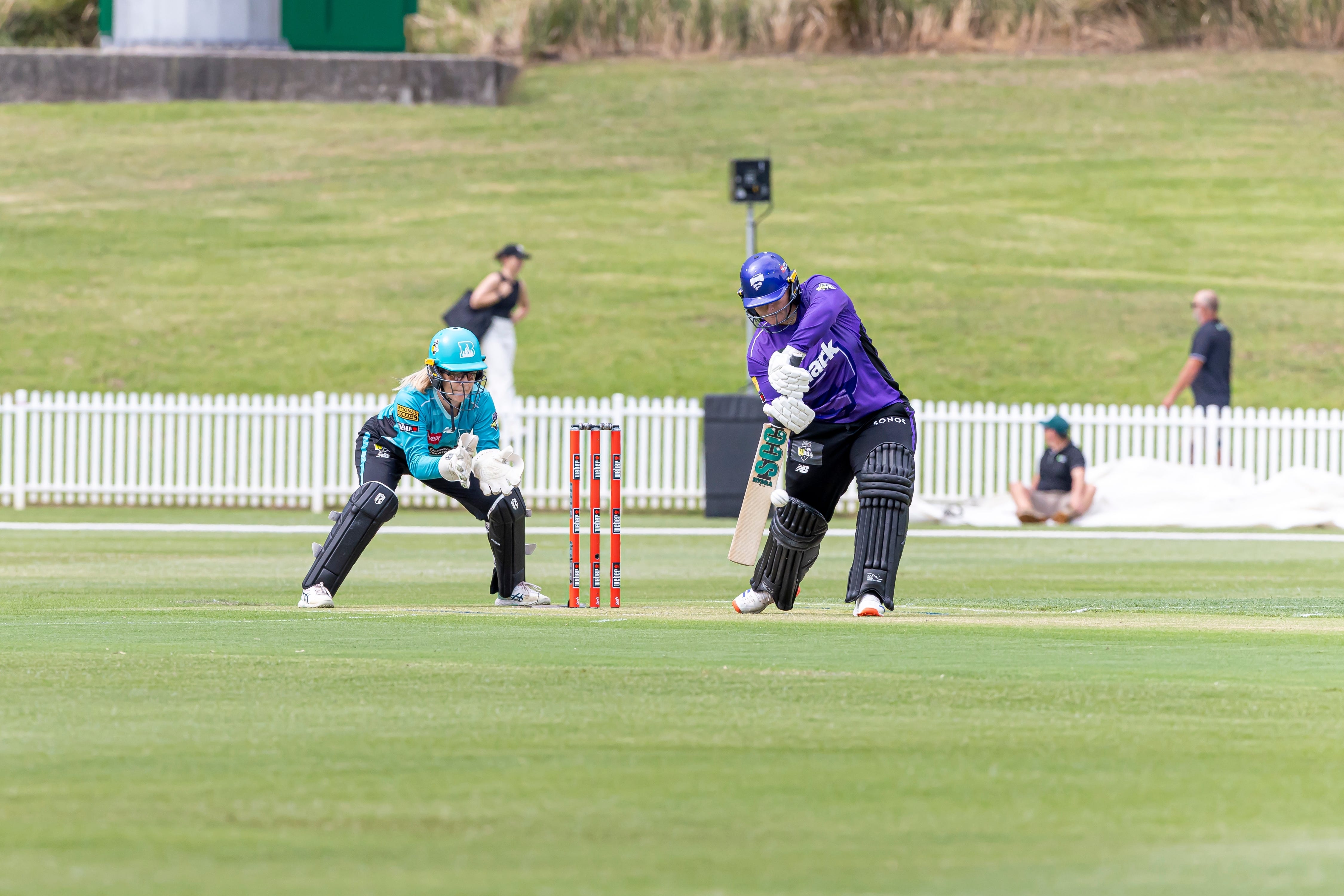
I grew up playing, listening to commentary, reading about, and watching cricket. The peculiarities of the game (which other team sport has one of its formats spanning 5 days?) and the even greater eccentricities of its terms (fine leg, silly mid-off, chinaman, square cut…) add to its allure, or to bewilderment and frustration. For me and for millions, it’s the first. For long it had a code set in notions of fair-play and good sport as different from violent, bloody battle, that it was after all just a game. Fine ideas which, as time went by, were often more in expectation than in the actual execution. Still, you didn’t kick the other man on the field or flick one between the legs. You used to see rotund fellows trundling along who became legends as the greats of the game. You didn’t need to be an athlete, although there were plenty of those. There was an easy and amateur chill about cricket. The game progressed and developed, found more ways of being interesting and engaging, players became athletic. Cricket became professional and lucrative. That wasn’t bad, it just changed. It became serious.
Cricket, as played by men. The game as played by women is a different ballgame. It started quietly and remained that for decades. Played to an audience size that was as meagre a trickle as the pay (the pay in the men’s game was a pittance too for a long time but there was always an audience), the women’s game has bloody-mindedly stayed the course. That is a tribute to everyone involved; many who should have given up remained resilient. Slowly they won over an audience. I have been mildly familiar with it since the ‘80s but I started following it with increasing attention only in the last about 8 years. With good reason. I enjoy it as much as I do the men’s game but while my view of the men’s game is tinted by mild cynicism, I look at how women play it with eyes that hold a happy smile.
It doesn’t have the immense power that typifies batting in men’s cricket nor is it remarkable for prodigious swing and spin or speed of the ball that bowlers send down the pitch. What women have in their game is precision and deft touch reminiscent of an era gone by. It’s like a breath of fresh air redolent of a less polluted, less harried time. When you see Kim Garth bowl, you’re reminded of what Glen McGrath used to swear by: you need to have the ball move only that much so it misses the middle of the bat, kissing its edge instead on its way to being caught by a fielder or if it misses the bat altogether, it doesn’t do that with the stumps behind the batter. Precise, landing on a dime, and moving just that bit; nothing outlandish. Time after time, ball after ball. A subtlety that is a joy to behold, something that is becoming increasingly rare when the men play. A Smriti Mandhana replaces raw power in batting with timing and grace that has often been compared to that of David Gower’s batting. While it is a compliment, I think she’s incomparable; she’s all her own thing. And every once in a while, as is the case with anything in life, you get an outrageous talent like Phoebe Litchfield who changes everything that you deemed possible and and took as the norm in how the sport is played.
The bugs in the field
What I find most disappointing, however, is the fielding, the frequent absence of game awareness, and the shortage of inventiveness. The fielding - even at something elite like the recently concluded Women’s T20 (it’s the shortest official format of cricket) World Cup - is often woeful. Women in other sports show an athleticism that women cricketers often fall short of. It’s palpable in the lack of alacrity and agility. You’ll often see them slow in bending down or make awkward, ill-timed dives to stop the ball. There are some very good folk out there - the likes of Jemimah Rodrigues and Litchfield spring to mind immediately, quite as they do on the field - but the overall standards are a tad embarrassing. That said, it’s come a long way even in these last few years and I think there’s a newer lot of players who are breaking in to the game and are elevating the fielding performance. For now, it’s still much work in progress. Game awareness and smarts is a problem area. I would not say that it’s always on point in the men’s game but it’s generally something that’s taken for granted there whereas there are quite a few moments of inexplicable blunders one sees in women’s cricket which are inexcusable. There’s more than enough footage to learn from and experience in coaching staff which should make it easy for the players not to err thus. Something that one is hopeful of seeing a change for the better. I think more Test matches (that 5-day sporting incongruity which I mentioned earlier) would help. You must have greater strength and stamina as well as tactical and strategic acumen to survive and thrive in that format. Right now, that format is a rarity for women. That must change. The game is in a place and time where the players could be much more inventive and adventurous than they are. They seem to be just playing catch-up to the men. I think they should be taking a different path and leading with newer skills. I am puzzled that it’s not happening because it’ll make their game so much more interesting and worth following.
The gentleman’s game. And the ladies totally own it.
In spite of what I have called out, I thoroughly enjoying watching them play. It’s not just the skill that attracts me to it. Women’s cricket is beautifully balanced. In a hyper-aggressive and overly intensive world of sport, it seems an anachronism. A very welcome one! There is a greater and calmer acceptance of flaws and failings. That is the first step to getting better. Glossing over those just makes the path of progress slippery. I think that’s played a big part in the resilience and progress they’ve shown. There’s more visible respect and camaraderie among players of competing teams but that does not mean a lack of competitiveness; oh! but it is fierce on the field. You only have to see someone like Marizanne Kapp in action for example. But if there’s shitty behaviour and juvenile sledging when women play the game, it must be rare; I am yet to see it. It’s played hard but only so much as to not bruise anyone’s dignity. In the midst of intense competition, there is always time for smiles. You have to see women’s cricket to to be taught or reminded how you can be aggressive without being a boor, how you can play a hard game yet at the end think of it as just that, a game and not war.
As the women’s game progresses, I sincerely hope it doesn’t become more like the men’s game like what’s been happening, for example, in tennis. It’s not that one is better than the other; that comparison should not exist at all. It is different and that is important. That’s why I wish inventiveness the lack of which I bemoaned would suffuse women’s cricket to give us varied perspective. That difference makes life interesting and raises it from the stultifying tedium of sameness.
********************************************
As is often the case, what follows is the section for paying readers. The currency you use here is attention which you have paid to come this far.
Taylormade for Cla|i|re
Many who follow the game (I’m probably being generous with the ‘many’) know of the remarkable Elysse Perry who has played in the FIFA Football World Cup as well as many cricket World Cups for Australia; quarterfinal in football and winner in cricket. But much before her was Clare Taylor who played both the cricket and football World Cups for England in the ‘90s. She was a key player in England’s cricket World Cup triumph in ‘93. What is even more extraordinary is that they were active in both sports simultaneously. They ended up choosing to stick with cricket and the game is richer for that. Interestingly, Clare’s cricket career overlapped with Claire Taylor’s who came in to the England side later. Conversations involving their name-calling would have been fraught with confusion (“not you, Clare; the i has it”). Incidentally, both were awarded MBEs by their country’s queen.
Talking of which…
Many women cricketers have been very open about their sexuality. There are women players who are partners on and off the field. That’s not much known in men’s cricket. I do not think one needs to talk about what is personal in public. This is just an observation which harks back to my point about difference.
By Georgia!
Georgia. That name has so much of an old-world feeling! You wouldn’t think it’d still be in use. Yet I know of at least four young women playing cricket who bear that name and I have seen them all play: Georgia Voll, Georgia Wareham, Georgia Elwiss, and Georgia Adams.